QR Code
Close

People Positive: The social impacts of climate work

Published September 9, 2026

Thank you to our lead sponsor, Carrier!

The building industry has developed increasingly sophisticated ways to measure reductions in energy use and carbon emissions. But how can we demonstrate that our work is making people’s lives better?

In this episode of Building Tomorrow, we speak with author Gayathri Unnikrishnan about her new book, People Positive, coming out September 22. Gayathri argues that a major gap in sustainability is in how the industry measures human impact. While the industry has pointed to the improved social and health outcomes of sustainability, energy efficiency, and carbon reduction, it has not focused the same efforts on people. People Positive defines the next frontier of climate work as building better instruments for measuring and communicating how buildings, materials, supply chains, and places affect people.

Speakers

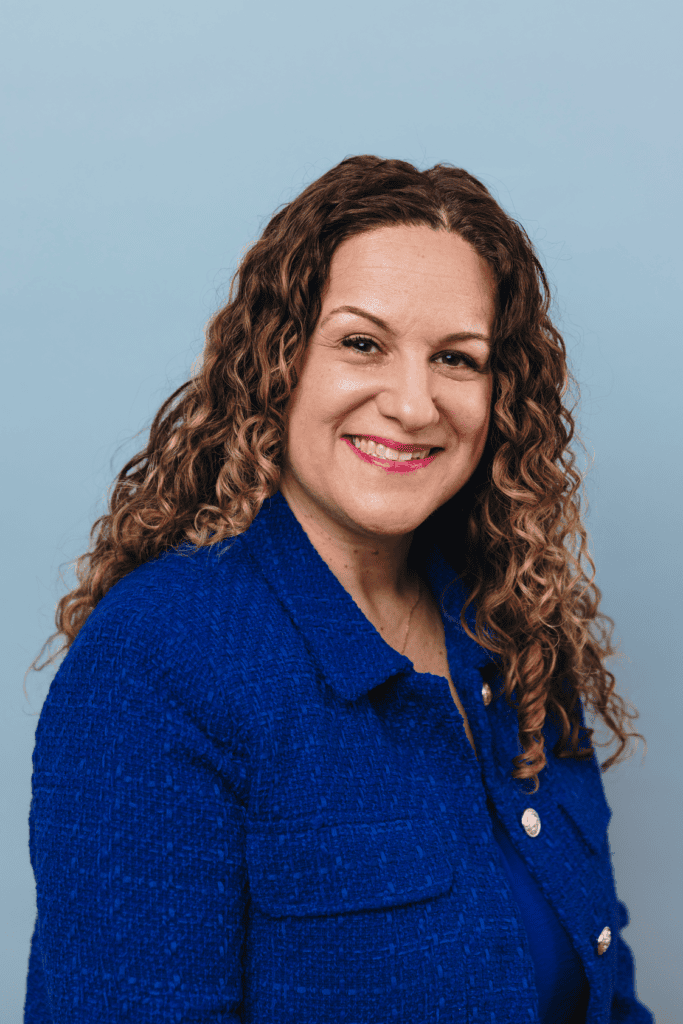
Danielle Donnelly
Associate Director, Programs and Engagement

Danielle is responsible for programming, engagement, and public programs. She previously worked at the Community Preservation Corporation where she managed their Sustainability Platform providing technical assistance to borrowers and lenders and produced educational resources aimed at furthering adoption of high-performance building standards and electrification. She also managed CPC’s administration of the Homes and Community Renewal (HCR) Climate Friendly Homes Fund; a $250M grant program dedicated to electrifying existing multifamily affordable housing and buildings in NYSERDA Disadvantaged Communities. She holds a B.A. in Political Science and English from The University of Connecticut.

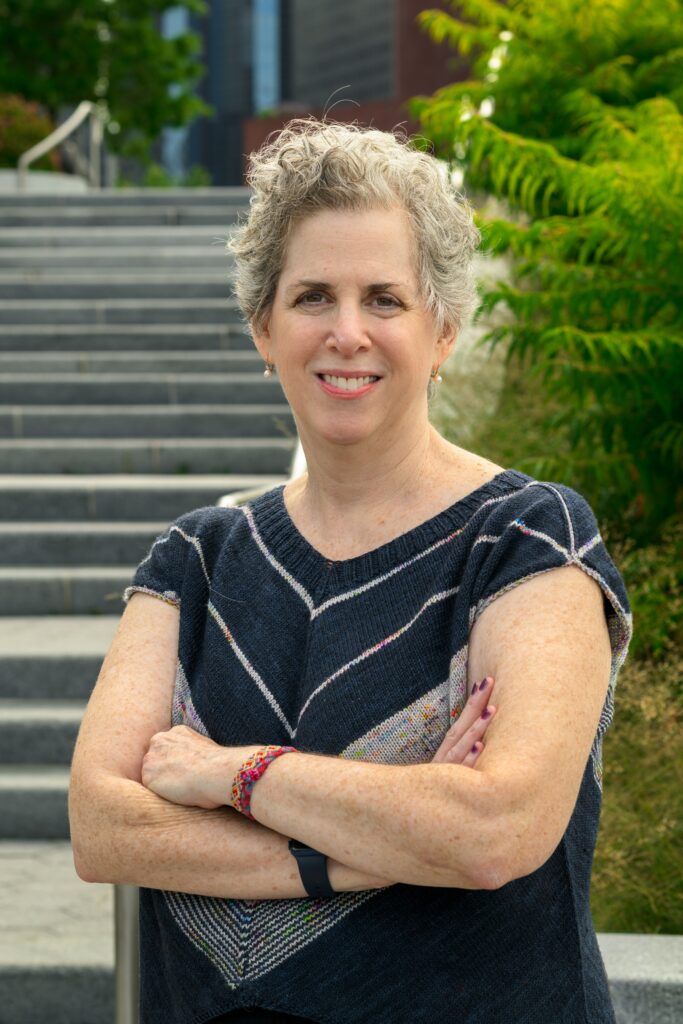
Gayathri Unnikrishnan
Founder, Liveable

Gayathri Unnikrishnan is the founder of Liveable, a social sustainability advisory firm working at the intersection of impact measurement, built environment strategy, and sustainability communications. She previously helped develop the WELL Building Standard while at the International WELL Building Institute and has worked across product development, manufacturing, design, and social impact.

Her work focuses on helping organizations in the built environment measure and communicate their impact on people in rigorous, practical, and useful ways for decision-making.

Liveable is currently serving as the social sustainability partner to the International Living Future Institute in developing the new Declare Equity label, with a focus on fair labor practices in the building product supply chain.

Resources

If you enjoyed this episode, please consider ⁠becoming a member of Urban Green⁠, and subscribing to our podcast for more insightful conversations on building a sustainable future.

Hashtags: #ClimateGoals #BuildingDecarbonization #EnergyEfficiency

Transcript

The transcript is AI-generated and may contain inconsistencies.

[00:00] Hi everybody, and welcome to Urban Green’s podcast, “Building Tomorrow,” where we have conversations with climate solvers. Every day we meet people who make a big difference in the built environment and are moving us closer to a low-carbon future, and we want you to hear their stories. Before we begin today’s episode, I’d like to thank Carrier, our podcast sponsor. My name is Danielle Donnelly, Associate Director of Programs and Engagement at Urban Green.

[00:22] Today we’re speaking with Gayathri Unnakrishnan, author of the forthcoming book “People Positive.” Gayathri Unnakrishnan is the founder of Livable, a social sustainability advisory firm working at the intersection of impact measurement, built environment strategy, and sustainability communications. Gayathri, welcome to “Building Tomorrow.” We’re so glad to have you here. Thank you so much for having me, Danielle. I’m very grateful to be here as well. So I want to ask you first
 

[00:49] to tell us a little bit about your background and the path you took to get to the work you’re doing today. Mm-hmm, sure. Um, my path wasn’t particularly linear, I would say, but when I think back, there was a pretty clear thread through it. I started my career off as an electrical engineer and then started working in lighting when LEDs were just out. So, you know, I was walking door to door
 

[01:18] in Dubai at the time, talking about this strange blue light that everyone should have installed because it was more sustainable. And, you know, the questions that were being asked of me at that point was, why is everyone looking, like, really deathly pale and so strange under it? But it taught me, it taught me the importance of managing innovation with human centricity, and we’ll get to that in a bit.
 

[01:49] I then went on to do my master’s in lighting design at KTH, Royal Institute of Technology in Stockholm, and that’s where really a pivot happened in my career. The way that they teach there is very different from what I have experienced in my other kind of educational endeavors. They don’t use books, so they’re like, you know, you can read a book, you don’t need us to read a book, you can
 

[02:14] read a book after your course, it’s fine, you’ll be okay. You need to practice what you’re doing. So a very particular project sticks out to me there, which is basically a project that was focused on this gorgeous lobby, okay, it had beautiful daylight, and we had to figure out, like, the electric lighting for it. And, you know, if you’ve been in art school or architecture school or design
[02:41] school, you know how it goes, you’re not sleeping, you’re testing out different things. And finally, when you’re ready for the design crit, the design crit session with your professor, you’re exhausted, you’re nervous, and you’re a little proud. You’re running on, like, fumes. My computer had crashed, like, five times at this point, very close to tears. And we show our amazing, amazing project.
 

[03:04] You’ve thought about the occupant and, you know, they’re going to look beautiful, the wayfinding is great, they’re going to, you know, be able to navigate the space really well. And a professor just goes silent for a bit and goes like, “Okay, you thought about all of them, but did you think about the person who would be cleaning the space? Have you thought about their safety?” And we had not, obviously, thought about
 

[03:25] the safety of the cleaners and the janitors and the people who take care of the space. And I think that’s when, like, a switch flipped for me, which was, the word occupant isn’t near, isn’t necessarily a neutral term. The word occupant is a term that defines who is seen in the space. We are not necessarily talking about the people who keep the place running, right?
 

[03:51] So that, I think that question or that moment really shifted the rest of my career as I see it. I went on to lead a lighting vertical at a very well-known real estate development firm in the UAE, and then started my own practice in lighting in Bangalore, all focused on kind of healthy, human-centric lighting, and then went on to work at the International Well-Building Institute in New York, where we focused on
 

[04:22] the development of the well-building standards, specifically Well-Be2. So I led the development of Well-Be2, worked on, with the well equity rating. With two other amazing women, Kimberly Lewis and Dr. Angie Scott, learned a lot from the people I worked with at the International Well-Building Institute, my colleagues, the advisors, etc. But the same thread kind of kept pinching at me: who are we not seeing, and why is it so hard for us
 

[04:54] to get human, human-centered design or human value specified, budgeted for, and seen right to the other end? I then went on to start Livable, which is the company that I founded a few, three years ago. We take a very kind of scientific, creative, scientific plus creative approach to defining what social value and human value means, and we look at it from the decision point. And we found that, you know, these are
 

[05:31] micro-decisions that compound, and there’s a lot that we can learn from the carbon measurement movement, I’m going to call it. There’s a lot that we can learn from sustainability because 20 years ago, sustainability was a very nuanced concept. But now, you know, carbon measurements, scope one, scope two, scope three measurements are almost, like, very common language that we use. So our approach to measuring the impact of
 

[06:00] a decision, impact of work on people, and thus helping people make better decisions, really is based on that logic and what we’ve learned from the carbon measurement movement. That makes a ton of sense to me, and I can see the practical focus, the work in practice that you experience in your education flow through through the rest of your work and the focus of your career, especially with the experience you had
 

[06:33] with the Well-Building Institute. So really interesting pathway. I don’t think a lot of our careers are so linear, and it’s so interesting to see how lighting design and just how people are lit in a space, experience a space, but also have to maintain the space, has kind of brought you to this place. So I want to come back to this shifting perspective about who is the occupant
 

[07:00] of the space and what should spaces do for the people who have to live in them, work in them, maintain them. And you reference this in your book, particularly in the subheader, “What We Measure, We Become.” What do you see as the historical driving force behind climate and sustainability work, and what do you hope the building industry will become? That’s a great question, Danielle. I think a lot of that thinking comes
 

[07:29] from the phrase that we’re all familiar with, “What gets measured gets managed,” and it’s often attributed to Peter Drucker. It’s kind of the dichotomy that we often face between qualitative and quantitative measurements. And we also need to, before we talk about sustainability, look at the history of how, like, we started counting things, specifically around counting money or counting, you know, the economics and accounting of it all.
 

[07:59] And in my book, I go into this in a little bit more detail, but specifically, I think it’s interesting to look at how we count caregiving. Caregiving is such an important structural part of what we do and how we, how our society functions, right? There isn’t, there isn’t an alternative to it. There isn’t necessarily a way that we can measure care.
 

[08:31] It is all usually unpaid. When it is paid, domestic work has often been seen as informal and invisible, and it is, it is never seen as part of, like, a country’s GDP, or it’s never seen as kind of the value of a person or of an entity, etc. However, without that, the society collapses, right? So fundamentally, the GDP framework was used to measure everything, and in fact, Robert F.
 

[09:10] Kennedy has a really great quote here. He says, you know, the GDP or the gross national product measures everything. In short, it’s about what makes life worthwhile. And there’s been a lot of criticism around the GDP framework, but a very popular one is under kind of GDP rules or how we measure the output of a country. If you strictly look at those rules, if an oil tanker runs into something
 

[09:37] and spills a lot of oil, millions and millions and millions of gallons of crude oil, let’s say, into an ecosystem, that disaster can be registered as an economic windfall. Why? Because that money, there would be money spent there. It would be spent on salvage crews, it would be spent on litigation, it would be spent on remediation and even medical treatment. Those all count as positive market production,
 

[10:09] and thus GDP rises. But coming back to caregiving, if a parent stays home to raise a child, there isn’t necessarily a change of cash or exchange of cash through a formal kind of market system. It, so the system registers the activity as, you know, a non-activity. It’s non-production. So there is a lot of criticism and some great reading there, which imply and which correctly assess that those boundaries were deliberate.
 

[10:45] They have been drawn with intent. So, which means that the systems that we’re relying on today are obsolete and not putting humans at the center of what we do, right? We need to change the system. The system is not great, but the reality is that’s the system that we’re working with, whether we like it or not, whether we agree with it or not. So coming to your question about how, how, what
 

[11:09] we measure, we become, and how can we learn, how can we learn about this with the climate and sustainability work, I think that there’s a lot that we can learn, like I mentioned earlier, with the carbon movement. I think the carbon emissions metric is far from perfect, right? Like, it doesn’t measure biodiversity, it doesn’t measure, it doesn’t measure remediation, it doesn’t measure so many things, but it provides a column on a
 

[11:39] spreadsheet that can be tracked over time. And I think because it can do that and because it has been reduced to the concept of carbon credits, it can be communicated easily with people who are not necessarily in sustainability. So at least from my experience of 18 plus years in the industry, what I’ve learned is that if something is not directly related to a budget line, the chances
 

[12:08] of it getting specified out or getting value engineered out is fairly high. However, if there is something that can be measured right till the very end, the chances of it getting specified out substantially reduce. And we see this with the well-building standard, for example, when performance verification became mandatory, when air quality, light levels, etc. start getting measured in the final kind of project or in the final space, the
 

[12:41] results were what was important and not necessarily kind of the process to get this. So what I’m trying to get at is we need to figure out a measurement system that works with the systems that we are in, and we can learn a lot from the climate movement into how we can start measuring or start integrating different ways of measurements for human dignity. And I do need to say we cannot measure
 

[13:12] human dignity, but we can measure the conditions that lead to human dignity. I think that’s a very important distinction to make, and we can do that with the tools that we have in the systems that we are in, within the decisions that we’re making day to day. That’s so interesting to me, and I don’t know that I’ve actually examined this for myself, but the thought of carbon as a currency,
[13:37] the need to commodify sustainability and carbon reduction in order to understand it is one that kind of just happened naturally because we’re dealing in a capitalist structure. So really interesting to kind of wrap your head around there. I do want to come back to the tension between qualitative and quantitative measurement in sustainable buildings in particular, because I think that the industry often points to healthier spaces,
 

[14:06] greater comfort, community benefits as outcomes of sustainable design, but usually what we have as evidence is anecdotal. These buildings are more comfortable, tenant retention is higher, we can measure indoor air quality, and we have some quantitative outputs from that, but the rest of these benefits are more qualitative. Why have those benefits been so difficult to measure, and what would be more credible measurement to look at? So one of the things that,
 

[14:37] you know, when we talk about quantitative measurements, and I’m going to specifically say ROI, for the return of investment, if you’re talking about energy efficiency, you know, once you installed, hypothetically, an energy efficient system, you switch it on, you can see the difference on day one, maybe week one, or even month one, if you compare it with before the system that was installed, or if we compare it to a similar.
 

[15:06] So the difference is fairly easily comparable. For humans, however, and this is something that we spent a lot of time on at the International Well-Building Institute, it’s not so simple. Like, you can’t, it’s not like, you know, you change out the lights and you provide better daylight, and the person, the occupants report the very next day, “Hey, you know, I had really great sleep because I received right, you know, great daylight,”
 

[15:34] or “My allergies immediately reduced, so I was more productive at work.” It’s

not that simple. It does take time. So it needs to be done over a course of time, and it needs to be a combination of qualitative and quantitative measurements. The quantitative measurements are usually just kind of objective measurements around air quality, you know, sound levels, light levels, etc., which, like I said, the conditions for human well-being can
 

[16:01] be measured. The qualitative are usually surveys or conversations or self-reported metrics, which are equally, if not more, important. And that takes time. That impact takes time to see. But then having said that, there are a couple of really great studies that link sustainable buildings, that link healthy buildings. Carrier is linked to kind of the foundational study that we often cite, which is the Kog Effect study that came out of Harvard.
 

[16:36] There’s also been a really great paper that was done on the well-building standard or the well-certified buildings a few years ago that directly linked kind of human health and well-being with people’s, with their kind of physical environment. And somebody once told me that we are living in a quarter-to-quarter world, trying to solve problems that take generations to generations or even decades to solve. So the answers are, you know, the answers aren’t
 

[17:08] so simple, but what is, I think, interesting is that we have come such a long way, like you said, about linking human health and well-being with sustainability and seeing the difference that sustainable design or choices can make in people’s lives over the course of time. And pointing to that work and the progress that’s been made there, you helped develop the well-building standard, which changed how the industry thinks about health and well-being
 

[17:41] in sustainable buildings. Where has the industry made meaningful progress, in your opinion, and what do you see as the key challenges that remain? I think there, I think the recognition of the fact that our physical environment has a direct impact on our health and well-being is a huge, like, I think we’ve made huge progress over the last 10 years. I joined IWBI in 2017. I left in ’22.
 

[18:12] So in that period of time itself, I saw, like, huge acknowledgement and awareness about the impact of our design and the impact of, you know, our choices within a space and on the people within it. So we’ve made, like, progress by leaps and bounds as an industry when we talk about health and well-being and how we can impact it within our circles of responsibility. And we’re starting to see elements of that
 

[18:43] come through in direct-to-consumer products. Of course, all of it is not related to the well-building standard, and that would be naive to say so, but the amount of understanding that we as a society, or the amount of acknowledgement that we have that our spaces have an impact on our well-being has drastically increased, which I think is amazing. I do think that we have some work to do around the inequities that exist,
 

[19:16] and they exist in all spaces. So there definitely are inequities that exist within buildings, that there definitely are inequities that exist within supply chains. A lot of my work with the International Living Future Institute is looking at the inequities that exist in supply chains and how we can find or have more transparency on who is working on the products that we use, that we specify, etc.
 

[19:48] So I think while the awareness, while the awareness has increased, and I think while a lot of the design decisions or design direction has gone in a, I’m going to say, people-positive direction, we do have a lot more work to do in terms of addressing inequities that exist, and we do have a lot of work to do in terms of making it more accessible to as many people as possible.
 

[20:15] So while we’ve come a long way in kind of the qualitative aspect of things, I think we can, there are still a ways to go before we can talk about the inequities, number one, communicating the ROI, the value of a space that is healthy, that is good for the people, products, etc., and measuring the impact of the work that we do. And looking at that piece of it, you have four central
[20:45] steps that you structure your book around: acknowledge, assess, adopt, and amplify to support the human value of our work. Can you walk us through this framework and how it can help turn human-centered values into practice? Sure. So there are four aspects or four steps that usually work really well if you’re trying to integrate human-centered approaches within whatever work you’re doing, right? So the first is acknowledge. So I think we need to,
 

[21:20] before we kind of measure, before we put out an impact report, before we try to change a specification, I think we need to acknowledge that every decision has an impact, and we need to understand what the impact of a decision can be for the people that you see within the room, for the people that might be kind of tangentially involved, and for the people that you may never meet, such as people
 

[21:47] in the supply chain. So that acknowledge also helps us identify who the people are that this product is impacting. You don’t have to do anything about it. You know, it’s not a sign that you need to kind of have the most perfect product that may not fit within your budget, but it’s like a practice to start understanding, “Hey, okay, the decisions I make on a day-to-day basis can have more
 

[22:09] long-term impacts than we, you know, that we may think,” especially when we are trying to meet several deadlines at once. The second is assess. So this assess is really, we’re looking at evidence. We’re looking at what we know. We don’t know what we don’t know, but let’s look at what we know, right? What are the risks that we’re looking at when we install this product?
 

[22:31] Are there people that might be short-changed or who might be negatively impacted by this? And what changes do we need to make so we are not, you know, making unwanted or unneeded assumptions based on the information we have? If you don’t have the information, you don’t have the information, but it’s really, let’s understand, okay, we know that these are the people that might be impacted, this particular,
 

[22:57] you know, thing we don’t know about supply chain, but do we know what the impact is on the installers? Do we know what the impact is on the cleaners? You know, would they have to use chemicals that may be harmful to them? Do we know what the impact is on the occupants, right? So we kind of assess what the impact of that decision would be.
 

[23:16] The next is adopt. Adopt is really how do we create briefs or how do we create specifications or documents that will integrate the decisions that we want to make so that it goes right up until installation and after. This is kind of the most, I would say, risky or vulnerable part of the process. Across the world, you know, this is usually where budgets change.
 

[23:46] This is usually where products change, where teams change hands. So we encourage, you know, when you, if you’ve made a decision and you’re writing a specification, outline why a particular specification has been made and what are the considerations that you made. This is kind of where you bolster the decision that you have made so that somebody else, two years down the line, when they look at it,
 

[24:12] they know why a decision has been made. And when they’re looking at value engineering, which invariably, from my experience, does happen, they know kind of what the alternatives that they can look at are and what the conditions are. And finally is amplify. Amplify, I think, is the most important step, mainly because it helps with two things. The first is it helps spread kind of lessons learned.
 

[24:38] It helps kind of translate that across teams, but also how can we translate that across the industry? What can we learn from a project that some other company or competitor has worked on? It’s really the space that I think needs to be invested because once a project is over, often, you know, we wrap it up, we’re done with the project, we got the certification, let’s move on.
 

[24:58] But then that little kind of, you know, that liminal space right after the documentation submission, specifically when we’re talking about a lead or a well or a FitWell certification, is where we have a lot of learning that is lost. And if we utilize that learning and we amplify it, that can drive change faster and accelerate the work that we’re going to do. So those four-step process, acknowledge, assess,
 

[25:23] adopt, amplify, is really a way to integrate within the process that we already have within the building industry. Our goal is that, you know, it shouldn’t be up to a person to have to be a hero to save a specification. There’s enough of things going on. We shouldn’t have to fight for every single decision to be human-centered. But what we can do is set in place kind of guardrails
 

[25:51] through this process that integrate within kind of systems that are already in place and help drive more human-centered decisions across the board. I’m thinking about that and the burden on our industry to push so much of this forward and the individuals. And I think it’s important to acknowledge that we all need to kind of make these changes and figure out ways to adapt our work so it is more human-centered.
 

[26:19] But some professionals may worry that measuring social impact will add another layer of reporting without improving decisions. How can this work be more rigorous and useful without creating another box-checking exercise like some of us have experienced? That’s a great question. And for someone who has worked in certifications for nearly 10 years at this point, I have an allergy to documentation. Like, I’m like, you shouldn’t have to document something
 

[26:51] for documentation’s sake. I think that is a waste of time. I think, you know, we shouldn’t have to reinvent the wheel every time a new concept is increased. So yes, the few individuals who are concerned about reporting another layer of measurement would be completely right, and I agree with them. I think what we do need to stay away from box-checking exercises.
[27:15] We have enough documents. Like, there’s enough. We don’t need to create another layer on top. For me, the test is fairly simple when it comes to measurements. What decision does this information change? So I would encourage us to look away from documentation and look at decisions and decision points. And that’s a lot of kind of how we approach. What are the decision points and what information do we need to
 

[27:42] change those decisions? I think it’s important for us to understand what is the priority here, what is the client’s priority here, and what are the decisions that this information can help with. So when we are talking about adding another layer here, we are talking about what do we need to make a decision, to protect the decision down the line, and how can we use that information to celebrate what has been done
 

[28:09] so that when we get to that amplify phase, we can all talk about kind of what we’ve learned, how we can change things, and thus, you know, drive more ripples within the industry. I’m trying to say is that 10 useful measures is substantially more valuable than a really nice, fancy dashboard that has 150 indicators that, you know, we don’t really know what to do with. It makes sense to me, and I
 

[28:35] think that there has been a mindset shift in the industry towards holistic approaches to improving buildings. And I think that we’re not just adding a point system for improving human experience when we think about centering people in our work. We’re just adding them as an element of the whole in how we experience buildings. Yes, exactly. And I think to add to that, I think it’s important for us
 

[29:01] to measure trends. We need to be trending in a people-positive direction

versus absolutes. And thinking about how we start to trend in that direction, what are some practical steps building professionals can take now to better understand and address the human impacts of their work? I would encourage, you know, everyone to start with the decisions that they’re making today. So in the book, I outlined three circles of responsibility, and that’s based
 

[29:31] on Stephen Covey’s, you know, three circles of control. It’s really understanding, okay, what is our immediate circle? What are we immediately impacting? And sometimes, you know, what we’re immediately impacting is, oh, I’m in charge of the agenda today and nothing else. I just have to take meeting minutes. I have nothing else to contribute. I can’t change a decision. And that’s fine. But can you ask a question when
 

[29:57] there are conversations about something being value-engineered out or a timeline changing? Can you ask, do we know what the impact of this is going to be on the team members down the line? Do we know what the impact of this is going to be on the installers? Is there a way that you can ask more of those questions? I would highly encourage you to do that.
 

[30:19] So again, understand, you know, a way to look at this is who is affected by the decision or what are we assuming about what happens to those people? How can this information change a decision? Those are all great questions to start, but I would suggest starting with the meetings that you’re part of every single day and your inbox because those are the most powerful tools that we have, our never-ending inboxes
 

[30:46] and our, you know, our voice. I also, another aspect of this that I found is a little trick, which is to look backwards. So apart from looking at kind of your inbox and your meetings, look backwards. Look at the projects that you’ve done that you’re extremely proud of, that you haven’t had a chance to celebrate. Think about those projects. Think about kind of what those elements were that led to
 

[31:08] that. How can you talk about the lessons learned for successful projects so we can drive more change? And we all need ideas of how we can make more people-positive spaces. So to close us out today, what is one thing you’d like to leave the Building Tomorrow audience with ahead of your book launch? I think, you know, we need to bring back our work to the decisions that
 

[31:38] are being made. Every project we work on is a culmination of hundreds, thousands, even millions of decisions. So if there’s one thing that I would love for, I would love for people to think about is what decisions are in front of you and how can you trend that a little bit more in the people-positive direction? What information do you need to trend it there? And how can we start recording
 

[32:04] that information so we can continue to have more people-positive spaces, products, et cetera? So I don’t think the next chapter of our work of sustainability is about commitments. I think we are way past commitments, and, you know, data shows that. I would say my advice or one thing that I would like to leave our listeners behind with is what are the decisions that you can trend towards in a
 

[32:28] people-positive direction? And if you can’t, if you’re finding you can’t and it’s really hard, what information do you need to do that? I want to thank our guest, Gayathri Unnakrishnan, author of the upcoming book People Positive. I really enjoyed our conversation today. All resources from today’s episode will be linked in the description. We’d like to thank Carrier for sponsoring this podcast. And thank you to Urban Green’s members and sponsors. If you’d like to become a member, please visit urbangreencouncil.org. Thank you for tuning in today. If you’re enjoying this podcast, please consider subscribing so that you don’t miss out on any of the great conversations. See you next time.

Building Tomorrow: Conversations with Climate Solvers

Building Tomorrow demystifies complex ideas about buildings, and introduces you to the people doing the work!

arrow_clover

Prioritizing environmental justice as we electrify

Sonal Jessel, Director of Policy at WE ACT, joins Zakiyah Sayyed and Anushka Maqbool to discuss how electrification must benefit historically disadvantaged communities.

arrow_clover

Keynote with NYC Comptroller Mark Levine

Live from our 2026 conference, NYC Comptroller Mark Levine joins to discuss the city's economy and building decarbonization.

arrow_clover